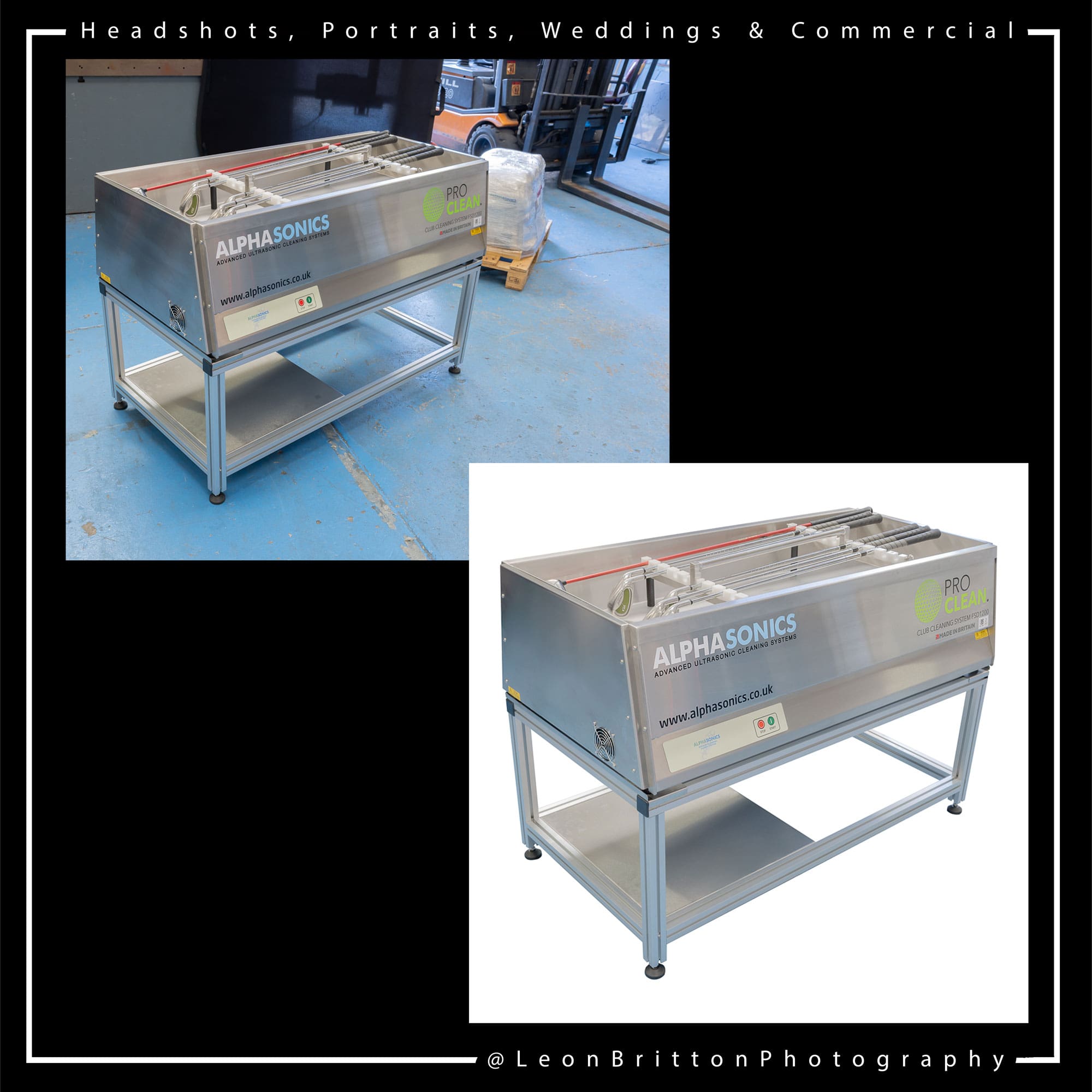
When a business hires me for commercial or industrial photography, the shoot itself is only half the work. The other half happens afterwards, at the desk — and it’s the part most people never see. Post-production is where a strong on-site image becomes a polished, brand-ready one.
Industrial and commercial environments are rarely camera-perfect. There are harsh lights, awkward shadows, cluttered backgrounds, safety signage, reflections off machinery. Capturing the shot well in the first place is essential — but careful editing is what turns “a good photo of your site” into an image you’d be proud to put on your website, in a tender document, or across your marketing.
What post-production actually does
- Corrects and balances light so the image looks clean and professional rather than flat or patchy.
- Removes distractions — stray clutter, blemishes, the odd thing that pulls the eye away from the subject.
- Brings out detail and depth so products, machinery or premises look their best.
- Keeps everything consistent so a full set of images feels like it belongs to one brand.
Honest, not artificial
There’s a line I’m careful with: editing should enhance reality, not fake it. The goal is for your business to look its best on a good day — sharp, professional, trustworthy — not to create something that misleads a client when they turn up in person. Done well, post-production is invisible. People simply think “that’s a great photo”, without ever noticing the work behind it.
Why it matters for your business
Your imagery is often the first impression a prospective customer gets of your operation. Polished, consistent photography signals a polished, consistent business. It’s a quiet but powerful trust signal, especially in industries where clients are weighing up who to take seriously.
What post-production typically involves
For most commercial shoots, post-production includes colour grading (ensuring the images feel consistent with each other and with the brand’s visual identity), retouching (removing temporary blemishes, distracting reflections or environmental elements that weren’t practical to address on location), and careful cropping and composition refinement where needed.
For industrial photography specifically, there’s often additional work involved: adjusting the way artificial lighting reads, managing the dynamic range between very bright and very dark areas of the frame, and sometimes compositing elements from multiple exposures to produce an image that represents the site accurately but more compellingly than any single frame could.
The difference between good editing and over-editing
There’s an important line between editing that serves the subject and editing that replaces it. The goal of post-production in commercial photography isn’t to make an image look like it was taken in different conditions u2014 it’s to make it look like the best possible version of what was actually there. Clients who can tell their images have been heavily manipulated lose the authenticity that makes commercial photography valuable. The best post-production is invisible.
Delivery formats and usage rights
Commercial images are delivered in the formats needed for your intended uses u2014 high resolution for print, appropriately compressed for web and social, in the colour profile specified by your brand guidelines if you have them. Usage rights are covered at the point of booking, so there are no surprises about where and how you can use the images. If your requirements change after the initial brief, that’s a conversation we can have u2014 I’d rather accommodate your needs than create friction.
To discuss a commercial photography shoot in Liverpool or the wider North West, see my commercial photography or get in touch.